Technical Due Diligence
For investor, acquirer, lender, board, or founder readiness decisions where technology risk affects confidence, timing, or terms.
Unified Assessment Framework
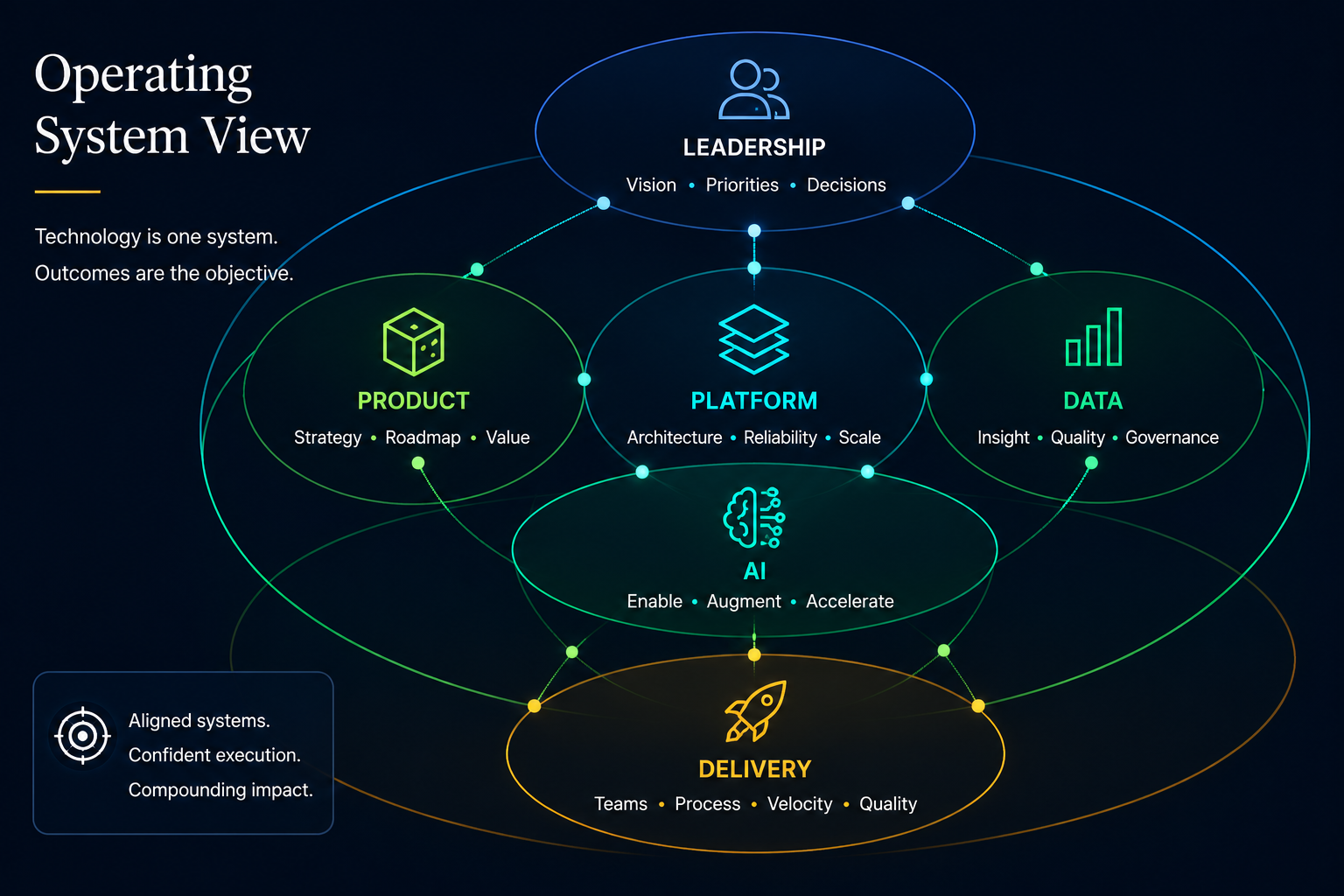
The Nimble CTO assessment framework gives leadership teams a shared view of what is happening across leadership, technology, delivery, data, AI, and governance before choosing the operating move.
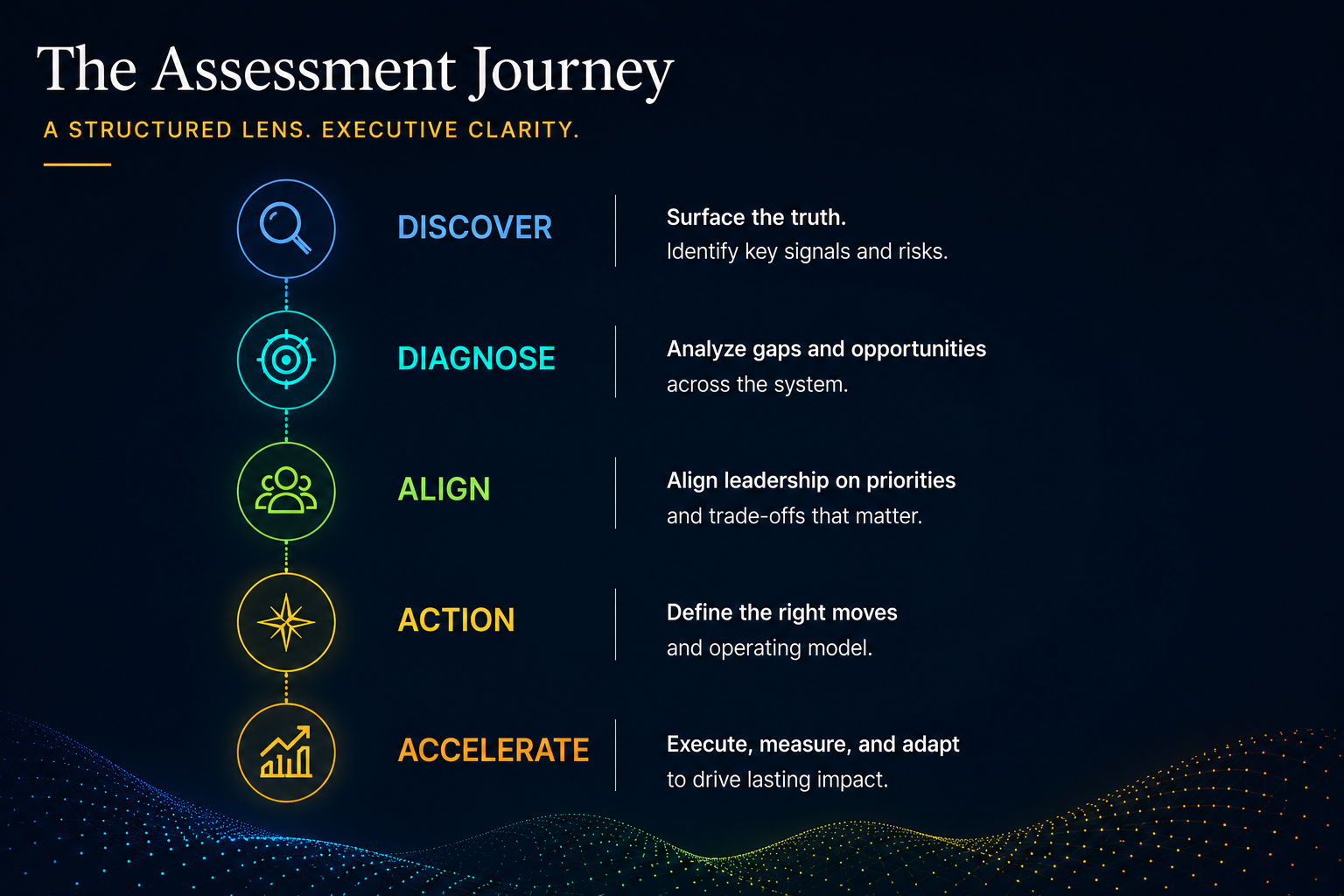
Narrative to evidence
The work starts by separating narratives from observable evidence. From there, the leadership team can decide what requires clarity, alignment, execution, or scale.
Assessment taxonomy
Different entry points use the same evidence-first discipline. The question is which decision the evidence needs to support.
For investor, acquirer, lender, board, or founder readiness decisions where technology risk affects confidence, timing, or terms.
For decisions about ownership, executive technology leadership, decision rights, team maturity, and dependency risk.
For architecture, platform, reliability, security, scalability, observability, and technical debt decisions.
For roadmap credibility, delivery predictability, operating cadence, customer impact, and execution risk.
For use-case priority, data readiness, workflow adoption, governance, owner model, and measurable AI outcomes.
What gets assessed
The framework is broad enough to show system-level causes and practical enough to produce a next-step plan.
Leadership
Clarity on who owns priorities, trade-offs, escalation, and executive communication.
Technology
A practical read on scalability, technical debt, security exposure, observability, and continuity.
Delivery
Evidence on predictability, sequencing, dependency management, support load, and customer impact.
Data
A view of whether the business can trust the data needed for operations, reporting, and AI.
AI
Assessment of business fit, workflow change, governance risk, owner model, and measurable outcomes.
Governance
Decision rights, review cadence, risk ownership, board visibility, and proof of progress.
Decision outputs
Competing narratives
The most expensive decisions often begin with two plausible narratives. The work is to find the evidence underneath them.
Board narrative
Assessment tests whether the root issue is AI readiness, data quality, workflow fit, governance, leadership ownership, or delivery capacity.
Leadership narrative
Assessment tests whether the issue is leadership capability, decision rights, operating cadence, organizational design, or unclear priorities.
Scaling narrative
Assessment tests architecture, reliability, observability, technical debt, team dependency, and the business consequence of platform risk.
Service relationship
Fractional CTO engagements often emerge from assessment findings. The sequence is evidence first, then advisory, then recurring executive technology leadership when the business needs cadence, ownership, and execution support.